Newtown Sports Club

How Basketball Is Played : Complete guide 2025

How Basketball is Played

Hey there! If you’re reading this, chances are you’re either curious about how basketball is played or dreaming of becoming a basketball player someday. Either way, you’re in the right place.

I remember the first time I stepped onto a basketball court—confused, excited, and completely clueless. Since then, I’ve learned that basketball is not just a game; it’s a mix of skill, strategy, and nonstop action. So let’s break it all down in a simple, fun, and human way.

What Is Basketball All About?

At its core, basketball is a fast-paced team sport played between two teams of five players each. The goal? Score more points than the other team by shooting the ball through the hoop (basket). Easy to say, but there’s a lot going on once you start playing.

Learning how basketball is played isn’t just about throwing a ball through a hoop—it’s about understanding rules, teamwork, and strategy.

The Basketball Court and Equipments

When I first started learning how basketball is played, I didn’t realize how important the court layout and equipment were. But trust me—once you understand the space you’re playing in and the tools you’re using, the entire game starts to make more sense.

Let’s start with the court.

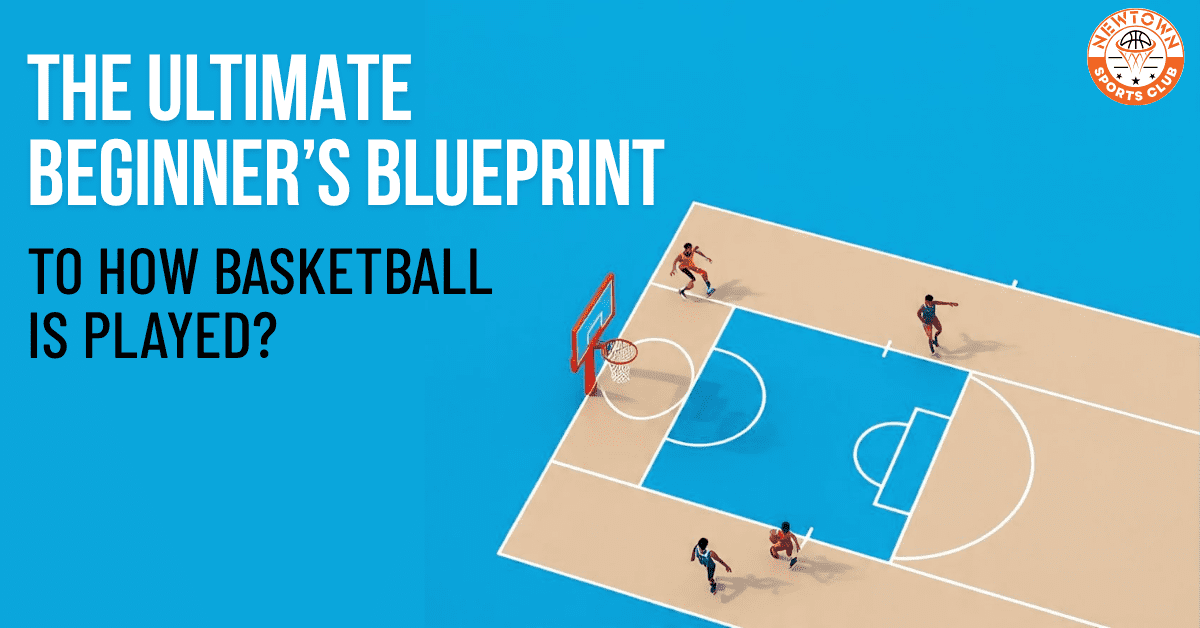
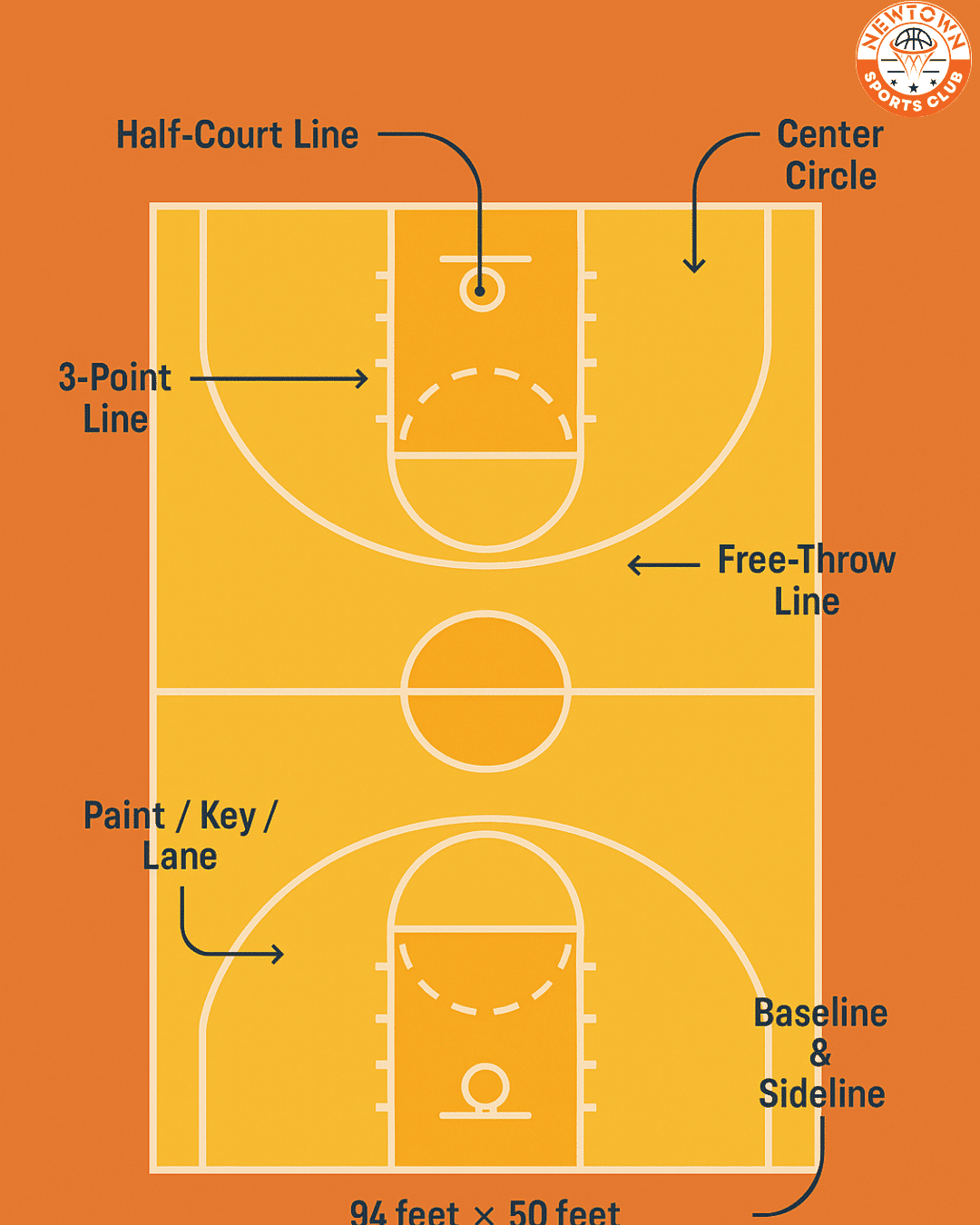
A standard basketball court is 94 feet long and 50 feet wide (for professional and college-level play). But in school gyms or local parks, it might be smaller.

1.Center Circle

This is where the game begins—with a tip-off. It’s the circle at the center of the court, and it decides who gets first possession.

2. Half-Court Line

This line divides the court into two halves. Once your team crosses it into offensive territory, you can’t go back over it (or it’s a backcourt violation).

3. 3-Point Line

 A curved line forming an arc around the basket. Shots made from outside this line are worth 3 points—if you can hit them, it’s a game-changer!

Basketball Court Layout

4. Free-Throw Line

This line is 15 feet from the backboard. If you get fouled while shooting, you shoot free throws from here. Each basket counts as 1 point.

5. The Paint / Key / Lane

This is the rectangular area under the hoop, also known as “the key.” It’s where big men (Centers and Power Forwards) dominate, and where most of the rough action happens.

6. Baselines & Sidelines

These lines form the boundaries of the court. Step on or over them with the ball? It’s a turnover.

Understanding all these zones gives you a mental map of where you should be during offense or defense. And once you learn how basketball is played, you’ll notice how strategic player positioning on the court really is.

The Gear: Suit Up to Play Right

To really enjoy basketball—and improve your game—you need the right equipment. Here’s what I recommend (and what most players, from school to pro level, use):

Official Basketball

Size 7 (29.5") for men & Size 6 (28.5") for women and youth

Basketball Shoes

Shoes with ankle support, traction, and cushioning to absorb impact from jumping and quick changes in direction.

Comfortable Jersey & Shorts

Light, breathable, and flexible gear is key. Trust me, you don’t want to be adjusting your clothes mid-dribble.

Water Bottle & Towel

Hydration is no joke—especially during practice. A small towel for wiping off sweat helps too.

Knee or elbow pads

for extra protection

The Basic Rules: How Basketball Is Played

When I first tried to understand how basketball is played, the rules felt overwhelming. But once you break them down, it’s actually a pretty simple and structured game. It’s a blend of athletic skill, timing, and quick decisions—all within a set of rules that keep things fair and exciting.

So if you’re new to the sport, let me guide you through the core rules of basketball, so you don’t just watch the game—you understand it.

Basketball is played between two teams of five players each. The objective is to score more points than the other team by shooting the basketball into the opponent’s hoop, which is mounted 10 feet above the ground.

Every game is divided into quarters:

  • NBA: 4 quarters of 12 minutes
  • FIBA/High School: 4 quarters of 10 or 8 minutes

Scoring System: How Points Are Made

Understanding how points are scored is key to learning how basketball is played:

  • 2 Points: A regular field goal made inside the 3-point line.
  • 3 Points: A shot made from beyond the 3-point arc.
  • 1 Point: Free throws awarded after certain fouls. Each successful free throw counts as one point.

Possession & Shot Clock

basketball Possession and Shot Clock

Each team gets possession of the ball and must try to score within a limited time. This is where the shot clock comes in:

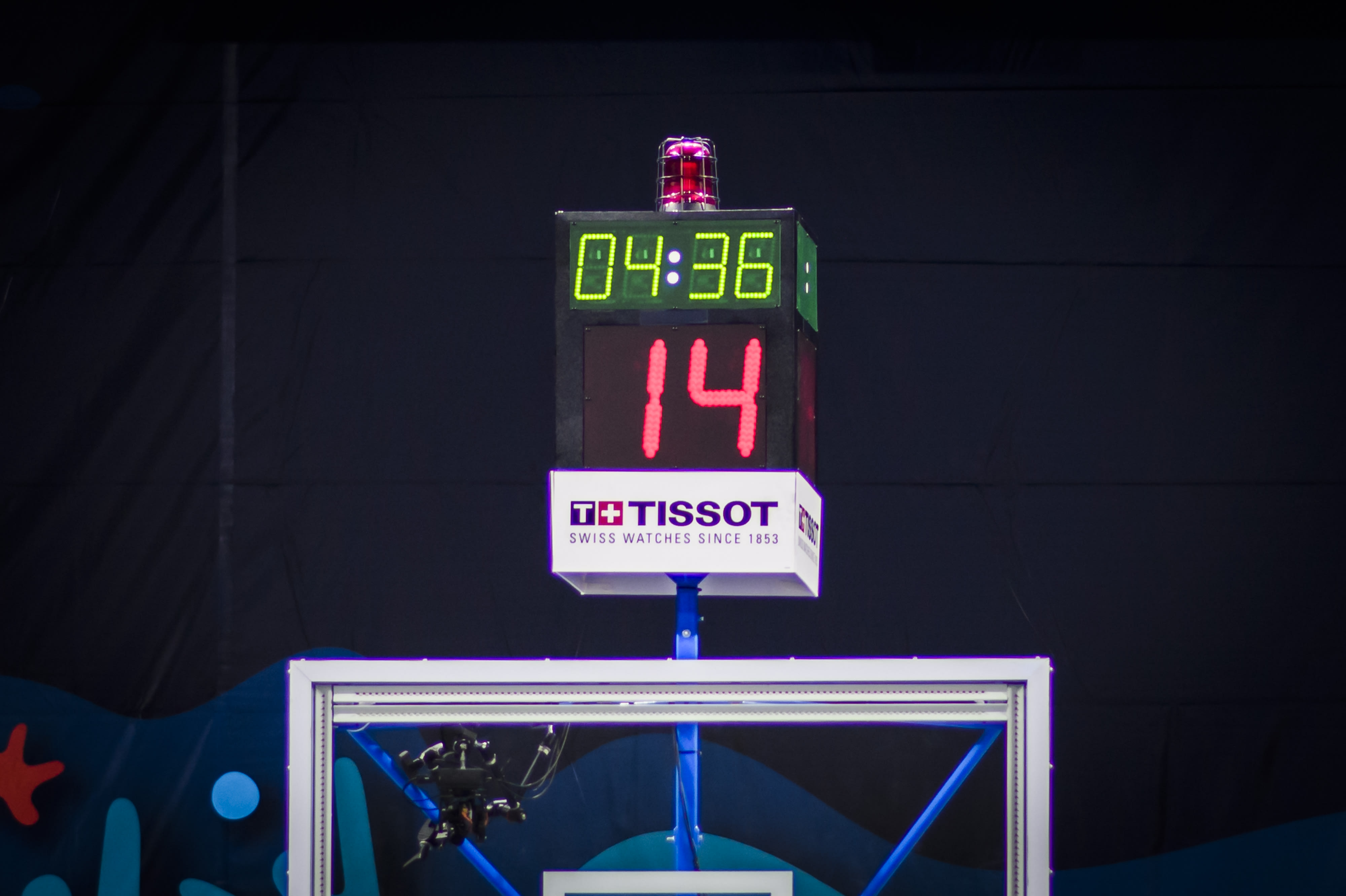
  • 24 seconds (NBA/FIBA) to attempt a shot after gaining possession.
  • If a team fails to shoot within this time, it’s a shot clock violation and the other team takes over.

There’s also an 8-second rule: the offense must cross the half-court line within 8 seconds of gaining possession, or they lose the ball.

Common Violations & Fouls

Breaking the rules leads to turnovers, penalties, or free throws for the opposing team. Here are the most common ones:

Violations:

  • Traveling: Moving with the ball without dribbling.

  • Double Dribble: Stopping and then restarting your dribble.

  • Carrying: Holding the ball too long while dribbling.

  • Backcourt Violation: Taking the ball back over the half-court line after crossing it.

  • 3-Second Rule: Offensive player can’t stay in the paint for more than 3 seconds.

Fouls:

  • Personal Foul: Illegal contact with an opponent (pushing, hitting, blocking unfairly).

  • Technical Foul: Unsportsmanlike behavior like arguing with referees or excessive taunting.

  • Flagrant Foul: Aggressive, dangerous contact—usually results in extra penalties.

Each player is allowed a limited number of fouls (5 in FIBA, 6 in the NBA). If you foul out, you can’t return to the game.

Join Now - #1 Basketball Academy

Basketball Positions & What They Do

Each player has a role, and every role matters. Here’s a quick rundown:

  1. Point Guard (PG) – The playmaker. Controls the game like a quarterback.

  2. Shooting Guard (SG) – Usually the best shooter. Think sharp, fast, and accurate.

  3. Small Forward (SF) – Versatile. Can shoot, defend, and drive.

  4. Power Forward (PF) – Strong and tough. Plays near the basket.

  5. Center (C) – Tallest player. Rules the paint on defense and rebounds.

Knowing positions is key if you’re figuring out how to be a basketball player and want to find your fit.

Basketball Player Positions

how to be a basketball player | Key Skills You Need to Play

Whether you’re just starting or already dribbling in your driveway, these are must-haves:

Basketball Dribbling

Dribbling

Control the ball with both hands.

Basketball Shooting

Shooting

Practice layups, mid-range, and 3-pointers.

Basketball Passing

Passing

Crisp, quick, and smart passes matter more than flashy ones.

Basketball Defense

Defense

Move your feet, not just your hands.

Want to learn how to be a basketball player? Start with these basics, and build your skills step by step.

Pro Tips for Aspiring Basketball Player

Want to level up? These tips helped me, and I’m sure they’ll help you too:

  • Don’t skip warmups and stretches.
  • Focus on both offense and defense.
  • Record your game or practice to spot mistakes.
  • Take care of your diet and fitness.
  • And most importantly—never stop learning.

Remember, learning how to be a basketball player isn’t a one-day journey—it’s a lifestyle.

How to Start Playing Basketball (Even If You're a Complete Beginner)

So you’re pumped to start playing—great! Here’s what I recommend:

  • Join a local club, academy, or school team.

  • Watch and learn: Study pro games and player moves.

  • Practice daily: Even 20-30 mins of drills can do wonders.

  • Find a mentor or coach who can guide you.

  • Play pickup games: Best way to apply your skills and get better.

Honestly, when I started out, I was nervous and made a bunch of mistakes. But consistency is what helped me improve. And yes, it all began by simply learning how basketball is played properly.

Final Thoughts: On how to be a basketball player

So now you know the basics of how basketball is played—from rules and positions to skills and beginner tips. If you’re serious about how to be a basketball player, just remember this: start small, stay consistent, and enjoy the process.

You don’t need to be tall or perfect—you just need passion, practice, and persistence.

FAQs

What is the basic rule of basketball?

Two teams try to score points by shooting the ball through the opponent’s hoop while following specific rules like dribbling, passing, and defending.

How do you win a game of basketball?

Score more points than the opposing team before time runs out.

Can I learn basketball on my own?

It’s very  very difficult, as this is a team sport. So if you learn alone, you can never sync  with your teammater during real match, there wont be any bonding. And moreover, without a proper coach or academy, you can not learn the skill, techniques, and other things. not everything can be learnt with the help of videos.

How to be a basketball player in school or college?

 Join your school team, practice daily, attend camps, and participate in tournaments to gain exposure.

How many players are on a basketball team?

Each team has 5 players on the court at a time, but the full team usually has 12-15 players including substitutes.

How long does a basketball game last?

A standard professional basketball game lasts 48 minutes (4 quarters of 12 minutes), but games at school or amateur levels might be shorter, often 32 or 40 minutes total.

Is height important in basketball?

Height helps, especially for certain positions like center or power forward. But skills, speed, and game IQ are equally important—many successful guards aren’t very tall.

How can I improve my shooting accuracy?

Focus on your form, footwork, follow-through, and consistency. Repetition and muscle memory are key—practice short shots first, then move to longer distances.

What should a beginner practice every day?

Start with ball-handling (dribbling drills), shooting form, passing against a wall or with a partner, and footwork drills like defensive slides.

How do I stay motivated when I don’t see progress?

Progress in basketball takes time. Track small wins (like better dribbling or more stamina), set short-term goals, and surround yourself with a supportive team or coach.

About the author

Basketball Coaching in Kolkata

Ajit Sharma

West Bengal National Coach (youth girl’s team)

Join Us Today!

Rate Us

Did you find our post helpful? Please share if you think it can help your friends, teammates and others.

Scroll to Top